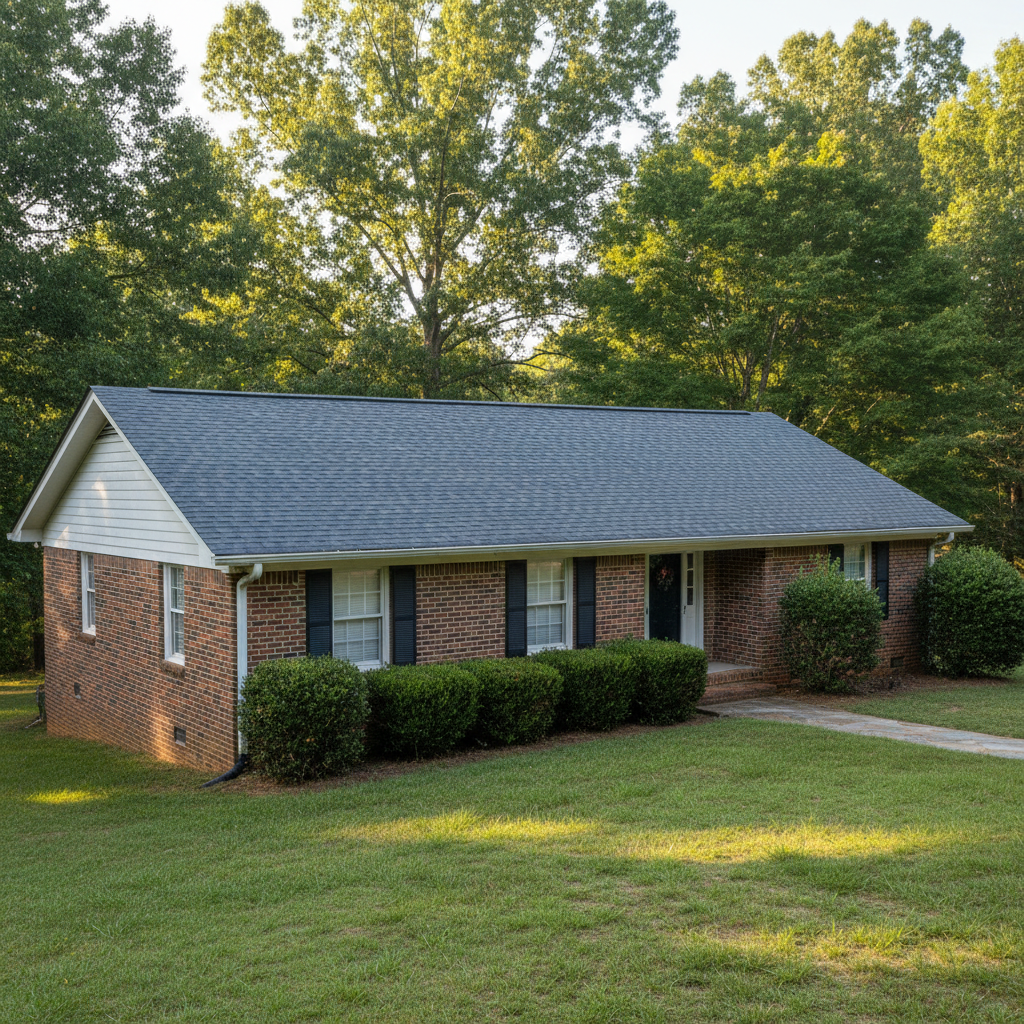
When a big storm rolls through Louisburg, it can leave a real mess behind. I've seen everything from missing shingles after a strong squall line to entire sections of roofs gone from a tornado that touched down near the river a few years back. If your home's been hit, your first thought is probably, "How bad is it?" and right after that, "How much is this going to cost me?"
What Makes Storm Repair Costs Go Up or Down?
Look, there's no single price tag for storm damage. It's not like buying a gallon of milk, you know? A lot of things play into the final bill. Here's what we look at:
- The Type of Damage: Hail damage, for instance, might just mean replacing shingles and gutters. Wind damage can be much more extensive, tearing off whole sections of your roof, fascia, or even siding. Water damage, if it gets inside, can quickly make costs climb because you're dealing with drywall, insulation, and potential mold remediation.
- The Scope of Damage: Is it just a few missing shingles, or is half your roof compromised? Is the damage isolated to one side of the house, or did the wind hit everywhere? The more widespread and severe the damage, the more labor and materials it'll take.
- Materials Used: Are we talking basic asphalt shingles, or do you have a more premium material like architectural shingles, metal, or even slate? Replacing like-for-like means the material cost will reflect what you already have.
- Accessibility & Complexity: A simple, easily accessible single-story roof is always cheaper to work on than a steep, multi-story roof with lots of valleys and dormers. If we need special equipment like a crane or extensive scaffolding, that adds to the labor cost.
- Emergency Services: If you need a tarp immediately to prevent more water from getting in, that's an emergency service. It's usually a separate charge, often a few hundred dollars, but it's crucial for protecting your home while you wait for full repairs.
- Insurance Deductible: This isn't a repair cost itself, but it's what you'll pay out of pocket before your insurance kicks in. Most homeowner deductibles for storm damage are 1% or 2% of your home's insured value. So, if your home is insured for $300,000, a 1% deductible means you're paying the first $3,000.
Typical Cost Ranges for Common Storm Repairs in Louisburg
I can give you some ballpark figures based on what I see around Louisburg. Remember, these are estimates, and your specific situation could be different.
- Minor Shingle Repair (10-20 shingles): If it's just a few shingles blown off or cracked by hail, you might be looking at $250 - $600. This is a quick fix for a small area.
- Moderate Roof Repair (Small Section, say 50-100 sq ft): If a bigger chunk of shingles is gone, or you have some flashing damage, this could run you $800 - $2,500. This often includes some underlayment replacement.
- Extensive Roof Repair (Large Section, 200-500 sq ft): For significant wind or hail damage to a larger portion of your roof, but not a full replacement, expect $2,500 - $7,000. This might involve replacing decking, multiple layers of underlayment, and a good amount of shingles.
- Gutter Replacement (100 linear feet): If your gutters got smashed by hail or torn off by wind, replacing them typically costs $600 - $1,500, depending on the material (aluminum vs. copper) and how complex the job is.
- Siding Repair (Per square foot): Siding damage can vary wildly. For vinyl siding, you might pay $5 - $10 per square foot for repair or replacement of damaged sections. For more premium materials, it's higher.
- Emergency Tarping: As I mentioned, expect $300 - $700 for a professional emergency tarp job to prevent water intrusion.
If the damage is widespread, say over 25-30% of your roof, it often makes more sense to replace the whole thing. A full roof replacement in Louisburg usually starts around $10,000 for a smaller, simpler roof and goes up from there, often $15,000 - $30,000+ for larger or more complex homes.
What Should a Good Quote Include?
When you get a quote from Charis Roofing Solutions or any reputable contractor, it shouldn't just be a single number. It needs to be detailed so you know exactly what you're paying for.
- Detailed Scope of Work: This should clearly list what's being repaired or replaced. For example, "Remove and replace 100 sq ft of damaged architectural shingles, replace 2 sheets of decking, install new synthetic underlayment."
- Materials Breakdown: What type of shingles, underlayment, flashing, and other materials will be used? Brand names and specifications are good to see.
- Labor Costs: This might be rolled into the total, but it's good to understand the labor involved.
- Permit Fees: For significant repairs, Franklin County might require a permit. This cost should be included.
- Cleanup & Debris Removal: This is essential. You don't want to be picking up nails and shingle pieces for weeks after the job.
- Warranty Information: What kind of warranty do they offer on their workmanship and the materials?
- Payment Schedule: Typically, a deposit upfront (often for materials) and the remainder upon completion.
How to Avoid Overpaying for Storm Damage Repairs
This is where a lot of folks get tripped up, especially when they're stressed out after a storm. Here's my advice:
- Don't Jump at the First Offer: Storm chasers love to come through after a big event. They'll pressure you to sign on the spot. Don't do it. Get at least two, preferably three, quotes from local, reputable contractors.
- Verify Credentials: Make sure they're licensed and insured. Ask for proof. A legitimate business like Charis Roofing Solutions will have no problem showing you.
- Understand Your Insurance Policy: Before you even call a contractor, know your deductible and what your policy covers. Your adjuster will play a big role in the process. We work with insurance companies all the time, so we can help guide you through it, but it's your policy.
- Get Everything in Writing: Every detail, every cost, every warranty. If it's not on paper, it doesn't exist.
- Beware of Lowball Bids: If one quote is significantly lower than the others, there's usually a reason. They might be cutting corners, using inferior materials, or not fully insured. You don't want a cheap fix that causes bigger problems down the road.
- Don't Pay in Full Upfront: A reasonable deposit is fine, but never pay the entire amount before the work is done and you've inspected it.
Dealing with storm damage is never fun, but being prepared and knowing what to expect can make a big difference. Take your time, ask questions, and choose a contractor you trust. Your home's protection is worth it.