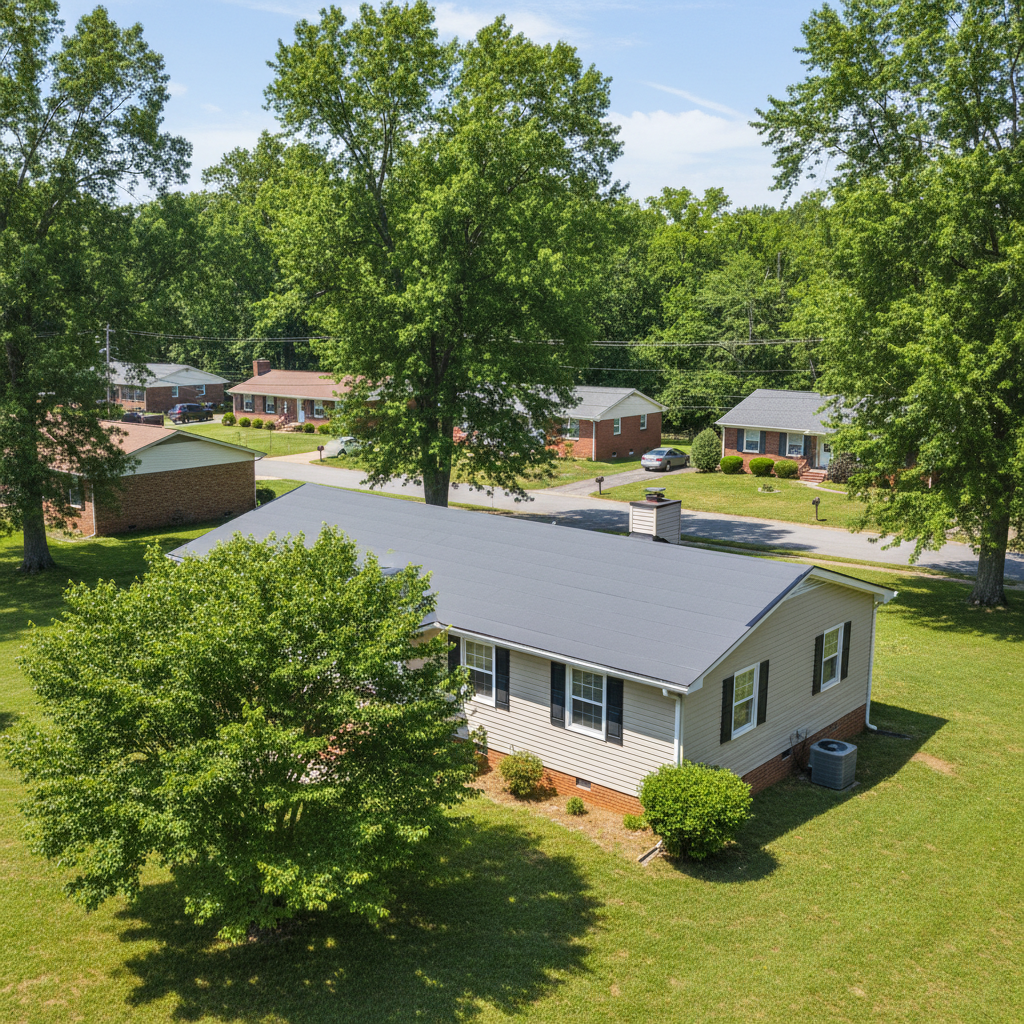
Flat roofs aren't just for big city skyscrapers. You see 'em all over Louisburg, especially on commercial buildings downtown, the shopping centers along US-401, and even on some of those modern home additions out towards Lake Royale. But just because they look simple, don't let that fool you. They've got their own quirks, and getting them right here in Franklin County means knowing a thing or two about our specific conditions.
What's Different About Flat Roofs?
Unlike a steep-sloped roof that sheds water fast, a flat roof — or low-slope roof as we often call it — relies on a slight pitch to guide water to drains. It's not perfectly flat; if it were, you'd have standing water everywhere, and that's a surefire way to shorten a roof's life. We're talking about pitches typically between 1/4 inch and 1/2 inch per foot. That's just enough to move water without it pooling up.
The materials are different too. You're not usually seeing shingles up there. Instead, we're dealing with:
- TPO (Thermoplastic Polyolefin): This is a single-ply membrane, really popular now. It's tough, helps save energy (especially the white kind reflecting sunlight), and stays pretty flexible.
- EPDM (Ethylene Propylene Diene Monomer): Often called 'rubber roofing,' this is another single-ply option. It's durable, stands up to hail, and has a long track record.
- Modified Bitumen: This is a bit like an evolution of old-school tar and gravel. It's asphalt-based, reinforced with polymers, and often installed in layers with a torch or adhesive.
- Built-Up Roofing (BUR): The classic 'tar and gravel' roof. It uses multiple layers of felt embedded in asphalt, topped with gravel. Still around, but less common for new installs these days.
Each of these has its pros and cons. What works best depends on the building, your budget, and what kind of abuse the roof is going to take.
Local Conditions and Your Flat Roof
Here in Louisburg, we've got some specific things that can really impact a flat roof. Think about our summers: hot, humid, and those afternoon thunderstorms can dump a ton of rain in a hurry. That's a lot for any roof to handle, but for a flat roof, it means:
- Thermal Expansion and Contraction: Those big temperature swings, from scorching summer days to chilly winter nights, make materials expand and contract. If the installation isn't perfect, or the materials aren't right for our climate, you'll see cracks and splits pretty fast.
- Heavy Rain and Drainage: When those pop-up storms hit, your drainage system better be on point. Clogged drains, improper slopes, or even just leaves from all the trees around places like the historic district can lead to standing water. And standing water is the enemy of a flat roof. It finds every tiny seam, every pinhole, and eventually, it's in your building.
- UV Exposure: Our sun is no joke. The intense UV rays can degrade roofing materials over time. That's why materials like white TPO are so popular here – they reflect a lot of that solar energy, which not only protects the roof but can also help keep your cooling costs down.
- Wind Uplift: While not as dramatic as a hurricane, our strong winds, especially during those spring and fall storms, can put a lot of stress on roof edges and seams. Proper fastening and edge detailing are crucial to prevent the wind from literally peeling your roof off.
Common Flat Roofing Projects We See
We do a lot of different flat roofing work around here. It's not just full replacements. Often, it's:
- Repairs: A small leak around a vent, a tear from something falling on the roof, or a seam that's come apart. Catching these early saves you a lot of money down the road.
- Maintenance: Cleaning drains, checking for membrane damage, resealing around penetrations. This is probably the most overlooked part of flat roof ownership, but it's vital for extending its life.
- Restorations/Coatings: Sometimes, a flat roof isn't ready for a full tear-off but needs a refresh. We can apply special coatings that add years to an existing membrane, especially if it's just showing signs of weathering.
- New Installations: For new commercial builds or additions, we're often putting in new TPO or EPDM systems.
Why Local Expertise Matters
You might think a roof is a roof, but that's just not true. A contractor from outside the area might know how to install a flat roof, sure, but do they know about the specific challenges our Louisburg weather throws at it? Do they know the common issues we see with older buildings downtown, or the newer construction out by the college?
A local company like Charis Roofing Solutions understands the nuances. We know what materials perform best in our climate, how to design drainage for our heavy rain events, and what kind of wear and tear to expect from our local conditions. We're not just installing a roof; we're installing one that's built to last specifically in Louisburg, NC. Plus, if there's a problem down the road, we're right here to take care of it. You won't be calling some out-of-state number hoping someone eventually shows up, will you?
So, if you've got a flat roof on your business or home addition, don't just trust anyone with it. Get someone who knows Louisburg, knows flat roofs, and knows how to put the two together for a lasting solution.